Bedroom planning guide
A Practical Guide to Choosing a Platform Bed Frame
A platform bed frame can make a bedroom feel simpler and more considered: a mattress, a supportive base, and a clear design that does not depend on a separate box spring. But the right choice is about more than looks. Dimensions, mattress compatibility, construction and the way you use your room all deserve a close look before you commit.
Start with the room, not the catalogue
A bed is usually the largest piece of furniture in a bedroom, so even a beautifully made frame can feel wrong if it overwhelms the space. Before comparing finishes or headboards, measure the room and sketch where the bed could go. Include the full frame footprint, not just the mattress dimensions: a headboard, rails or projecting legs may extend beyond the sleeping surface.
Measure the available floor area from wall to wall, then note doors, wardrobes, windows, radiators and any drawers that need to open. Leave enough clearance to walk around the bed and get in and out comfortably. In a smaller room, a few inches can make the difference between an easy route to the wardrobe and a daily shuffle sideways.
Also think vertically. The overall height of the frame, mattress and bedding determines how the bed sits in the room and how easy it is to get on and off. A low-profile platform can give a compact room an open, uncluttered feel; a taller setup may be more comfortable for someone who prefers not to sit down close to the floor. Neither is universally better. The useful question is how the proportions work for the room and the people who use it.
To avoid guesswork, mark the proposed frame dimensions on the floor with painter’s tape or paper. This simple test helps reveal whether bedside tables will fit, whether doors can swing freely and whether the bed leaves enough space for everyday movement. It is a practical step that can spare a lot of second-guessing after delivery.
Know what “platform” means
A platform bed frame is designed to support a mattress on its own structure. Depending on the model, that support may come from a solid platform, closely spaced slats or another built-in surface. Many platform designs are intended to be used without a separate box spring, which can simplify a bed setup and reduce the number of components to coordinate.
That does not mean every platform frame works with every mattress, or that all frames provide support in the same way. Check the frame’s instructions and the mattress maker’s requirements together. If the mattress requires a particular type of base, a specific slat spacing or a foundation, confirm that the proposed frame meets those conditions. The product name alone cannot establish compatibility.
Construction details matter because the mattress rests on them night after night. Look for clear information about the support surface, the distance between slats if relevant, and any stated limitations. Where a manufacturer provides a weight capacity, make sure it covers the combined load the frame will carry, including the mattress and sleepers. If specifications are not available, ask the seller or maker for written clarification before purchasing.
Some platform frames have a solid, continuous support surface; others use slats, which may allow air to circulate beneath the mattress. Each arrangement has its own requirements, and a particular mattress may be designed for one kind of base rather than another. Follow the specific guidance for your mattress rather than relying on broad assumptions about what “should” work.
Match the frame to the mattress
Mattress compatibility begins with size. A frame should be made for the mattress size you own, and its internal dimensions need to provide an appropriate fit. Standard labels such as Queen or King can be useful starting points, but dimensions can vary by country and sometimes by product. Compare measurements in inches or centimetres, and check both the mattress and the frame specifications instead of assuming the labels tell the whole story.
Thickness is another practical consideration. A deeper mattress can raise the top of the bed and cover more of a headboard; a thinner one may change the intended proportions. Think about how the finished height will feel when sitting on the edge, and whether the headboard remains visible above the mattress and pillows. If you use a mattress topper, include its thickness in that mental picture.
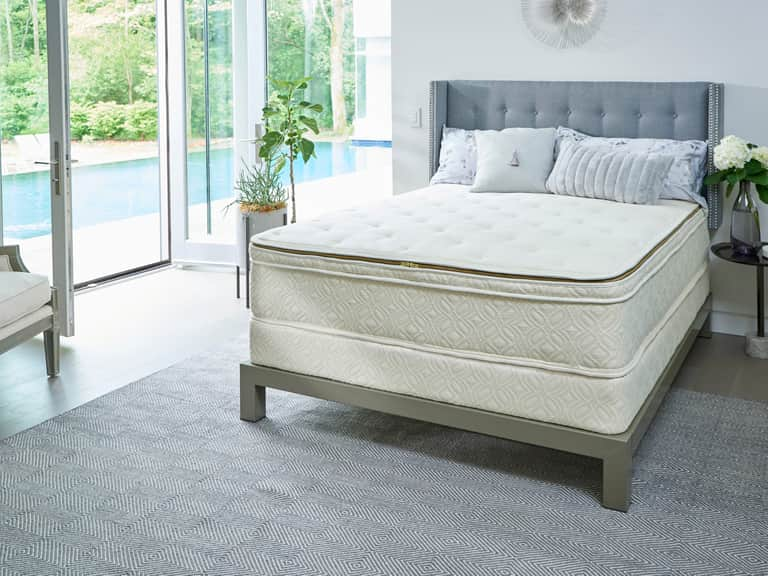
Weight and construction are worth checking as well. A substantial mattress may need a frame with suitable support and capacity. For example, the Naturepedic Elysium Hybrid Organic Mattress is described as a 15-inch hybrid with wrapped coils, organic Dunlop latex and a wool, alpaca and cashmere layer. Its depth and construction make it especially important to compare its requirements with the frame’s published specifications rather than treating mattress size as the only compatibility check.
When a mattress is already in the home, measure it rather than relying only on an old label or receipt. If you are choosing both pieces at once, compare the manufacturers’ guidance before making a decision. A well-matched bed is a partnership: the mattress provides the sleeping surface, while the frame supplies the appropriate foundation and fits the room around it.
Construction: the everyday details behind the look
Materials influence appearance, durability, weight and care. Wood frames can bring warmth and visible grain; upholstered frames soften the room and can provide a padded headboard; metal designs may offer a more spare, industrial character. The right material is the one that suits your preferences and practical needs, not simply the one that looks most impressive in a product photograph.
Read beyond the material headline. “Wood” does not tell you whether the frame is solid hardwood, engineered material or a combination, and an upholstered headboard may use several layers and fabrics. Look for specifics about the frame structure, joinery, finish and cleaning guidance. If the maker describes a frame as handcrafted, ask what that means for construction and what assembly is expected at home.
Consider the elements you will encounter every day: the height of the frame, the shape of the legs, the feel of the headboard, and whether the design leaves clearance underneath. A bed with open space below may make vacuuming easier or accommodate storage containers, provided the available clearance suits them. A frame with a more enclosed base can create a neat, grounded silhouette, but may make under-bed access less convenient.
Noise and stability can matter just as much as finish. A frame needs to be assembled correctly on a reasonably level floor, with its connections tightened according to the instructions. Ask about replacement parts and how the structure is supported. A clear assembly guide and accessible customer support are useful signs when evaluating a piece that will be used every night.
A closer look at the Larssen Bed
The Larssen Bed offers one example of a platform style with a restrained, mid-century modern look. It is made from natural hardwood and features geometric lines, a solid one-piece headboard and slender tapered legs. Its straightforward design puts the material and silhouette at the centre of the room rather than relying on elaborate ornament.
That simplicity can make a frame easier to coordinate with different bedding and bedroom furniture, but proportions still matter. Before deciding whether the Larssen Bed suits your space, compare its available dimensions with your mattress, measure the room and consider how the headboard will sit against the wall. Check the frame’s current specifications for size, support details, weight guidance and assembly requirements; these are the practical facts that determine whether the design fits your particular setup.
The visible style is only one part of the choice. Tapered legs can make a bed feel visually lighter, while a solid headboard creates a more definite outline. Think about whether the headboard’s shape works with bedside tables, wall features and the amount of room available behind pillows. A platform frame can be a focal point without dictating the rest of the bedroom, especially when the surrounding pieces are kept proportionate.
Its Vermont craftsmanship and natural hardwood construction may appeal to people looking for a clean, material-led design. Still, no style description replaces a check of product details. Ask about finish and care, confirm the mattress support arrangement and clarify what is included with the frame. A careful comparison lets the Larssen Bed be considered on its actual design and specifications, rather than on appearance alone.
Plan for the whole bedroom
A good bed frame should work with the room beyond the mattress. Measure the nightstands and make sure their height feels convenient beside the finished bed. Check that lamps, charging points and switches remain accessible. If the bedroom doubles as a dressing area or workspace, make sure the bed does not block the route between the door, wardrobe and desk.
Bedding affects both the look and the way the frame functions. A deep mattress with a thick duvet can visually soften a sharp-edged frame, while a low-profile arrangement may highlight its legs and base. If you use a bed skirt, confirm that the frame has a suitable shape and clearance for it. If you prefer to show the structure beneath the mattress, consider whether under-bed storage will be visible and whether that suits the room.
Headboard use is worth considering too. Some people like a firm surface behind pillows for reading, while others prefer a simple wall and an unobstructed bed. The frame’s headboard height and finish can shape how the room feels, especially in a compact space. If you plan to lean against it often, find out whether the design is intended to serve as a backrest and whether its surface is comfortable for that purpose.
Finally, think about moving the frame into the room. Measure stairwells, hallways, doorways and tight turns, not just the bedroom itself. A large headboard or long rail may be difficult to manoeuvre through a narrow passage. Check how the frame is packaged and whether assembly can take place in the bedroom, particularly if access is restricted.
Questions to ask before buying
A short checklist can keep a decision focused. Before choosing a platform bed frame, make sure you can answer the following questions with product-specific information:
- What are the frame’s external dimensions, and what mattress size is it designed for?
- Does the support surface meet the mattress maker’s requirements?
- Is a separate foundation or box spring required, optional or unnecessary?
- What is the frame’s stated weight capacity, if one is provided?
- How much clearance is available beneath the frame?
- What materials and finishes are used, and how should they be cared for?
- What assembly is required, and are tools or additional components needed?
- Will the frame fit through the route into the bedroom?
If any of those details are unclear, get the answer before ordering. It is especially useful to keep the mattress specifications nearby when contacting a frame maker or retailer. Clear, written confirmation is more reliable than a guess based on general descriptions or a similar-looking model.
Avoid common buying missteps
One frequent mistake is measuring only the mattress and forgetting the frame’s outer dimensions. Another is assuming every platform design eliminates the need for a foundation. Some do; others have particular mattress requirements. Always read the relevant instructions for both pieces and resolve differences before purchase.
It is also easy to focus on colour and style while overlooking height, clearance or capacity. A striking headboard may dominate a small room, and a low frame may be awkward for someone who prefers a higher seat. A design that works beautifully in a spacious showroom may need a second look when placed beside a wardrobe or in a narrow bedroom.
Finally, do not treat maintenance and delivery as afterthoughts. Natural wood and upholstered surfaces can have different care needs, and a heavy frame may require more than one person for assembly. Check the delivery arrangements, packaging dimensions, assembly guidance and return conditions so you understand the practical process as well as the finished look.
Make the decision with confidence
The best platform bed frame is the one that supports the mattress appropriately, fits the room and feels right for everyday life. Begin with measurements, verify mattress compatibility and assess the construction. Then bring in the details that make a bedroom personal: material, headboard, leg shape, storage needs and the way the frame complements the rest of the furniture.
The Larssen Bed illustrates how a clear, hardwood platform design can combine a defined headboard with a streamlined profile. Whether it is the right choice depends on its dimensions and support specifications, as well as the needs of your mattress and room. Careful checking turns a style decision into a practical one—and helps create a bedroom that feels composed, comfortable and ready to use for years to come.
Platform bed frame checklist
- Measure the bedroom, access route, mattress and frame footprint.
- Confirm mattress size, thickness and support requirements.
- Check frame construction, materials, capacity and under-bed clearance.
- Consider finished bed height, headboard proportions and furniture placement.
- Review care, delivery and assembly information before committing.