Materials & sleep comfort
Naturepedic Materials: A Practical Guide to Organic Sleep Surfaces
A mattress is more than a size and a firmness label. Its layers—what they are made from, how they are arranged and how they feel together—shape the experience of settling in for the night. Here’s a clear-eyed guide to the materials used in Naturepedic sleep products and the questions that can help you build a sleep surface suited to your preferences.
Published 16 October 2026
A mattress is a collection of choices
“Organic” can be a useful starting point when comparing sleep products, but it is not a comfort rating. It does not tell you whether a mattress will feel firm or soft, whether it will suit your sleeping position, or whether you will enjoy the way its layers respond when you move. Those details come from the complete construction—and from how that construction meets your body, your bedroom and your everyday habits.
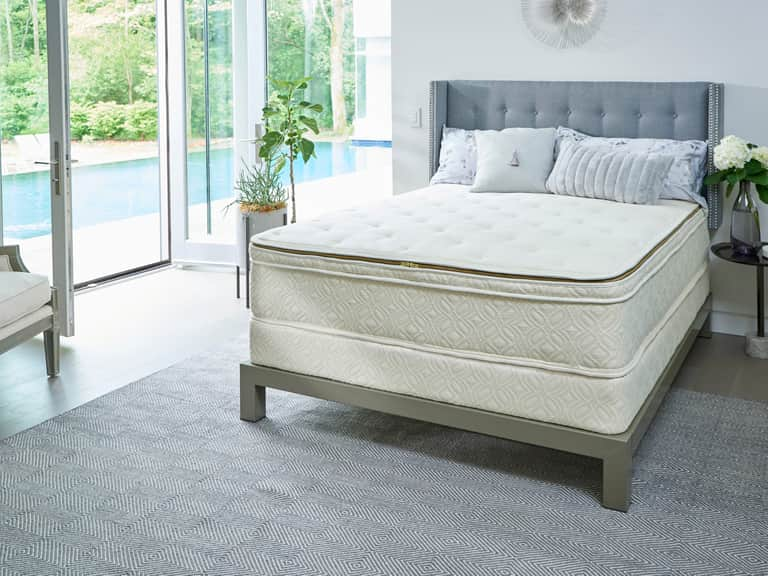
Naturepedic offers a useful example of how different materials can be combined in one sleep surface. In the Elysium Hybrid Organic Mattress, the listed construction brings together pocketed coils, organic Dunlop latex and a quilted layer containing wool, alpaca and cashmere. Each material has a different role in the overall design. The coils provide a spring-based support system, latex adds a cushioning layer, and the natural-fibre quilt contributes to the surface feel.
That combination may sound luxurious, and the mattress is a substantial 15 inches high. But the most useful question is not whether a material sounds appealing in a description. It is whether the whole arrangement matches the kind of support, pressure relief, surface feel and practical care you want. A bespoke sleep setup begins with those priorities—not with a single ingredient or a fashionable label.
What “organic materials” can—and can’t—tell you
Organic describes how certain materials are produced and certified; it does not automatically describe how a mattress feels or performs. When a product uses the term, look for specifics: which component is organic, what standard or certification applies, and whether the claim covers the whole product or particular materials within it.
For example, a mattress may include certified organic cotton in a cover or quilting, while other parts—such as metal coils—are not agricultural materials and are assessed differently. A clear product specification should identify the materials in the major layers and explain any relevant certifications. Certification names can be helpful, but they are not interchangeable, and a claim attached to one component should not be read as a blanket statement about every part of a finished mattress.
Before choosing, check the current product documentation for the exact model and size you are considering. Ask whether the certificate applies to the finished item, a particular material, or a portion of the supply chain. If you have a specific sensitivity or need, ask the manufacturer for detailed composition and care information rather than relying on a broad phrase such as “natural” or “clean.”
It is also sensible to keep expectations grounded. A material choice may matter to you for sourcing, feel or personal preference, but it should not be treated as a promise of a particular health outcome. A mattress is a comfort product, and no material description can guarantee better sleep for every person.
The main materials, in plain language
Organic Dunlop latex: cushioning with a responsive feel
Latex is used in mattress layers for cushioning and responsiveness. Rather than feeling exactly like a conventional spring unit, a latex layer can compress under pressure and spring back as weight shifts. How noticeable that response is depends on the latex formulation, its thickness, its firmness and the layers above and below it.
The Elysium’s listed construction includes three inches of customizable organic Dunlop latex. “Customizable” is an important detail to clarify before ordering: ask what options are available, whether they can be selected on each side, and how the selected feel affects the finished mattress. A layer’s name alone does not establish that it will feel soft, medium or firm to you.
Latex can be a consideration for people who prefer a surface that responds readily when they change position. But there is no universal winner in the latex-versus-foam conversation. Some sleepers enjoy a buoyant feel; others prefer a closer, slower-contouring sensation. If possible, test a comparable construction or confirm the retailer’s trial and return terms before making a decision.
Pocketed coils: support built from springs
Coils form the support core in a hybrid mattress. In a pocketed-coil design, individual springs are enclosed in fabric pockets rather than connected as one open unit. The Elysium is described as having 12 inches of organic wrapped coils in two layers. That gives shoppers a concrete construction detail to investigate, rather than relying on the word “hybrid” alone.
Coil count and height are not a complete measure of comfort. The gauge, arrangement, zoning, edge construction and relationship between the coils and comfort layers all influence how the mattress behaves. Ask how the support system is designed and whether it is intended to feel consistent across the surface or to vary by area. If two people share a bed, consider whether movement transfer and different firmness preferences are important in your comparison.
A coil system also needs an appropriate base. The foundation or bed frame can affect mattress performance and may influence warranty requirements. Check the manufacturer’s guidance on compatible support, spacing and any adjustable-base restrictions before settling on a complete setup.
Wool, alpaca and cashmere: a natural-fibre quilt
The Elysium’s quilted cover is described as organic sateen, with a blend of wool, alpaca and cashmere in the comfort layer. These fibres add another dimension to the feel of the sleep surface. Their effect depends on how much is used, how it is quilted and how it works with the latex and coils beneath it.
Natural fibres may appeal to shoppers who prefer them in a mattress cover or quilt. Still, fibre names do not tell the whole story: ask about the source, processing, certification and care instructions for the particular product. Also consider whether you prefer a cushioned, padded surface or a simpler, more direct feel. A lofty quilt can alter the first impression of a mattress even when the support core underneath is unchanged.
Because fibres and construction can vary between models, avoid assuming that a detail listed for one Naturepedic mattress applies to another. Read the current specification for the exact model, and ask for clarification if a material blend or certification is not clearly explained.
Cotton: cover, quilting and more
Cotton is commonly used in mattress covers and fabric layers. Its feel depends on weave, weight and how the fabric is finished. The Elysium product description identifies a 500-thread-count organic sateen quilted cover. Thread count is only one specification, however, and should not be treated as a stand-alone measure of comfort or quality. The cover’s construction, the fill beneath it and the mattress’s overall feel matter too.
When comparing covers, ask whether they are removable, whether they can be cleaned at home and what care method the maker recommends. Many mattress covers are not designed to be taken off and laundered, so it is worth confirming rather than assuming. A breathable protector may also change the surface feel; factor that into your expectations if you plan to use one.
How the layers work together
It is tempting to evaluate a mattress by its most attention-grabbing material. In practice, the combination is what you sleep on. A plush quilt above responsive latex and a coil core may feel quite different from a mattress with a similar coil unit but a thinner comfort layer. Even a promising material can disappoint if its firmness, thickness or placement does not suit the sleeper.
Think of the construction as a sequence. The cover is the first point of contact. The quilt and comfort layers shape the initial cushioning. Beneath them, the support system carries the body and affects how the mattress responds as weight shifts. The foundation then provides the platform on which the mattress rests. Every part contributes to the finished experience, although the effect of one component cannot be assessed in isolation.
Body weight, sleeping position, personal preference and the condition of the existing bed can all influence how a mattress feels. Side sleepers may focus on cushioning around shoulders and hips; back or stomach sleepers may pay closer attention to how well the surface maintains a comfortable, supported position. These are useful starting points, not rigid rules. Comfort is individual, and a mattress that works beautifully for one person may feel wrong to another.
A practical checklist for comparing options
Before committing to an organic sleep surface, make a short list of what matters most. Then use the same questions for each model you compare. That keeps the conversation focused on evidence and fit, rather than on whichever material has the most persuasive name.
- Which materials are in each layer? Request a layer-by-layer description, including the cover, comfort layers and support core.
- What does “organic” refer to? Find out which specific materials are certified, by whom, and whether the claim covers a component or the complete mattress.
- What firmness or customization choices are available? Ask how options are selected and whether they can be adjusted for different preferences on each side.
- How does the mattress feel in person? If a showroom test is possible, lie in your usual sleeping position long enough to notice pressure and support. A quick sit on the edge is not a useful substitute.
- What is the trial and return policy? Check the length of any home trial, return conditions, fees and whether the mattress must be used for a minimum period.
- What support does the mattress need? Confirm the compatible foundation, bed frame or adjustable base, plus any requirements about slats or centre support.
- How should it be cared for? Ask about rotation, cleaning, protectors and whether the cover can be removed.
- What happens at delivery? Confirm dimensions, access requirements, delivery method, assembly needs and removal options for an old mattress.
Those details are especially important for a bespoke sleep setup. Customization can be valuable, but it is only useful when you understand what is being customized and what happens if the chosen configuration does not feel right. Keep written specifications and policy details with your order information.
A closer look at the Naturepedic Elysium
For shoppers comparing materials in a hybrid format, the Naturepedic Elysium Hybrid Organic Mattress provides a specific example. Its listed 15-inch profile combines three inches of customizable organic Dunlop latex, 12 inches of organic wrapped coils arranged in two layers, and a quilt featuring wool, alpaca and cashmere. The cover is described as organic sateen, and the product information notes that it ships in multiple boxes and requires light assembly.
These details make the Elysium relevant to a discussion of material composition, but they do not establish that it is right for every sleeper. Its height, weight, feel and setup requirements may be important practical considerations. Measure the room and bed frame, check access through hallways and staircases, and confirm that the mattress dimensions match the foundation you plan to use. The listed sizes include Twin, Twin XL, Full, Queen, King and California King; verify current availability and exact measurements before ordering.
Product descriptions and specifications can change. Use the current manufacturer information for final decisions, particularly when checking customization choices, certifications, warranty terms and delivery arrangements. A detailed product page is a starting point for questions—not a substitute for confirming the particulars that matter to your household.
Don’t overlook the foundation
A carefully chosen mattress still needs suitable support underneath it. Naturepedic’s product information describes GOTS-certified organic foundations made with organic cotton fabric and FSC-certified North American solid wood. Two listed formats are an eight-inch standard foundation and a two-inch ultra-low-profile foundation, also described as a bunkie board. Sizes and compatibility can differ, so check the current specifications before pairing a foundation with a mattress.
Height is more than a style decision. A tall mattress on a tall foundation can make getting in and out of bed awkward, while a low-profile base can change the overall look and height of the bed. Measure from the floor to the top of the mattress and consider how that compares with your preferred sitting height. Also check whether your existing frame provides adequate centre support and whether the foundation is suitable for the mattress warranty.
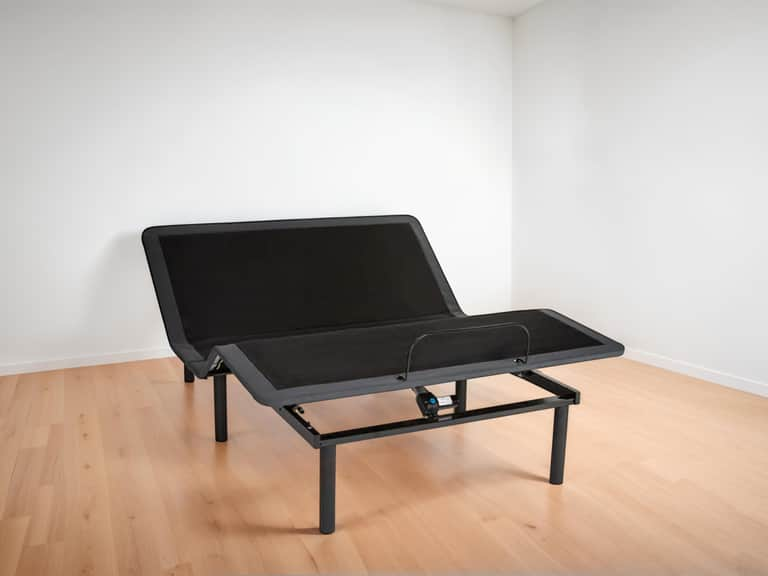
If you are considering an adjustable base, do not assume every mattress can bend or flex in the same way. Ask the mattress manufacturer whether the specific model is compatible, and confirm any restrictions on the base. Compatibility information should be explicit, not inferred from the fact that a mattress is a hybrid.
When a topper makes sense
A topper can change the feel of an existing mattress without replacing its support core. For example, the Healthy Choice Organic Wool Mattress Topper is described as approximately three inches thick, with GOTS-certified organic wool between two layers of GOTS-certified organic cotton fabric. It is a separate product rather than a Naturepedic mattress component, but it illustrates how a natural-fibre layer might be considered when someone wants additional cushioning.
A topper is not a cure-all. It cannot reliably correct a mattress that has sagged, lacks suitable support or is the wrong size. Before adding one, identify what you want to change: a firmer surface, more cushioning, or a different first-contact feel. Check the topper’s dimensions and care instructions, and remember that an added layer may alter the way the mattress and protector feel together.
The bottom line: choose the construction, not the buzzword
Naturepedic materials can help illustrate the range of choices involved in an organic sleep surface: latex for responsive cushioning, pocketed coils for a spring-based support core, and cotton and other natural fibres in the cover and quilt. The best fit depends on how those components are combined and whether that combination suits your own comfort preferences.
Start with the way you like a bed to feel. Then examine the complete construction, clarify what certifications apply, confirm the support requirements and read the delivery, trial and care terms. If a product description leaves an important question unanswered, ask before you buy. A thoughtful comparison is less about finding a universally perfect material and more about finding a transparent, well-specified setup that makes sense for you.
Organic materials may be part of what you value in a mattress, but comfort remains personal. Take the time to understand the layers, test what you can and make your decision with the full picture in view.